

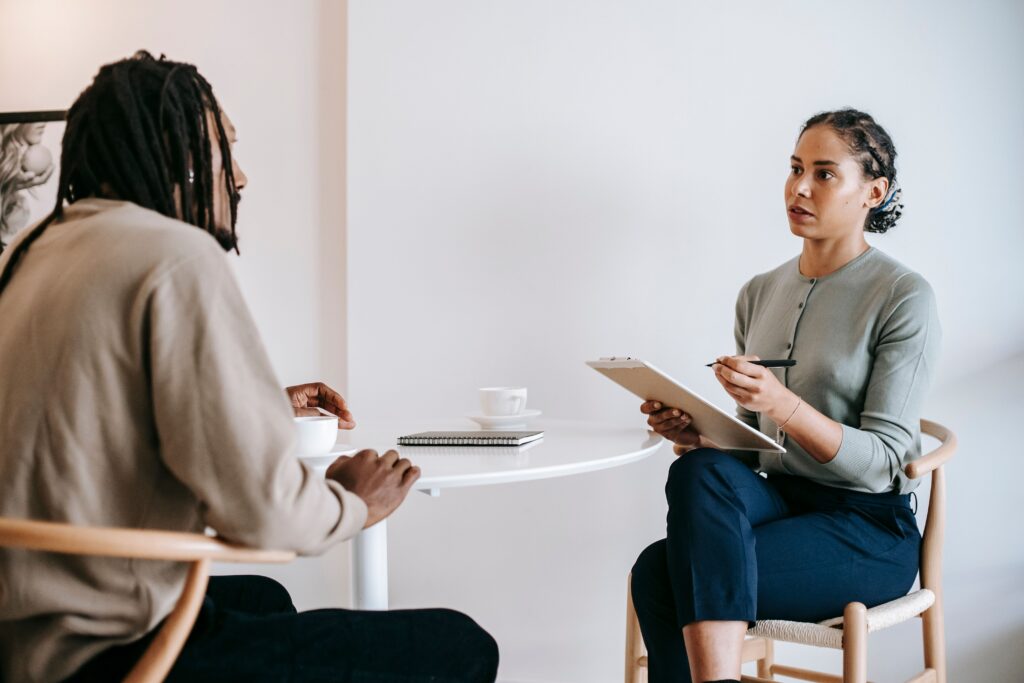
Halfway through your answer, the interviewer leans back and folds their arms. Stomach drop. You decide you’ve blown it, start talking faster, and now you actually are blowing it. But you misread the room. They might just be cold. Or tired. Or thinking. Reading interviewer body language isn’t about decoding every twitch. It’s catching the big honest signals, interested or drifting, and shifting your answer before the room cools for real.
Here’s what nobody warns you about. The harder you stare at their face, the worse your own answers get. So the real skill is reading them with maybe ten percent of your attention. The other ninety stays on the answer.
Why Interviewer Body Language Matters
An interview is two conversations at once. The words, and everything running underneath them. Both sides script the words. The body language is where the honest reactions leak out, and it tells you whether your last point landed or sailed straight past.
Catch that and you fix it mid-answer. Miss it and you find out from the rejection email three days later. A nod means keep going. A glaze means change something. That’s most of it, really.
There’s a trap built in, though. Read too hard and you start performing for their face instead of answering the question, which reads as nervous and wrecks the very thing you were trying to protect. So hold it loose.
How to Read the Signals Without Overthinking
Watch the big shifts. Ignore the small noise. Never bet the whole read on one gesture.
Most candidates do this backwards. They fixate on a single raised eyebrow and completely miss that the interviewer checked out three minutes ago. What you’re scanning for is the trend, not the twitch:
● Leaning in over time, or slowly drifting back
● Eye contact holding, or sliding off to the laptop and the clock
● Follow-up questions getting deeper, or thinning out
● Room energy lifting since you started, or going flat
One crossed arm in a freezing conference room in some Bengaluru office tower means nothing. Crossed arms plus short replies plus a wandering gaze, that means something. Patterns talk. Single gestures mostly lie.
Positive and Negative Body Language Signs
Some signals are worth knowing on sight, because they tell you whether to push or to pivot.
The green lights are easy once you’ve seen them a few times. Nodding while you talk. Leaning in. Eye contact that holds instead of flicking off. A pen moving the second you say something specific, that one’s gold, because people write down what they want to remember about you. And the big one: follow-up questions that dig into your real experience. Nobody chases detail on a candidate they’ve already binned.
The red flags run the other way. Read them gently:
● Eyes drifting to the phone, the door, the laptop clock
● A closed posture that stays closed, arms folded, body turned away
● Their answers shrinking, follow-ups drying up
● Getting cut off so they can jump to the next question on the sheet
Here’s the bit people skip. A negative signal isn’t a verdict. It’s a prompt. It means whatever you’re doing right now needs to change, and you’ve still got runway to change it.
How to Respond to What You’re Seeing
Engaged? Feed it. Reach for the stronger example, drop in one concrete result, the 30% you grew, the team you dragged through a brutal quarter. But stay disciplined. Engagement is not a hall pass to ramble for four minutes. Give them the better material, then hand the conversation back.
Bored or lost? The instinct is to talk louder and longer. Wrong. Do the opposite:
● Stop, and squeeze the point into one clear sentence
● Hand them the off-ramp: “I can give a quick example, or move on, whatever’s useful”
● Pull the point straight back to the job they’re filling
● And don’t get defensive, because that’s the move that actually loses rooms
That little “want an example, or shall I move on” line does something sneaky. It hands them control for a second, and a drifting interviewer re-engages faster from that than from any burst of enthusiasm.
Then the faces. Nod plus a small smile, you’re on track. Raised eyebrows could be interest or doubt, so check the rest of the body before you decide. The blank face is the hard one. It usually means nothing at all, just a face at rest, and candidates who panic at a neutral expression talk themselves into a hole. When you can’t tell, finish the point cleanly and let the next question tell you where you stand.
Body Language in Online Interviews
Video strips out most of the signals, so you work with what’s left. The frozen pause before they reply. The half-second of dead air that means they’re typing a note, not judging you. Eye contact flips too: look at the camera, not their face on the screen, or you’ll seem to stare at their chin for forty minutes.
On video your own cues matter more, not less. The screen flattens everything, so push a little. Sit up. Keep your face lit, your voice a notch warmer than feels natural, because the camera drains it out. Kill the obvious distractions, the buzzing phone, the second monitor your eyes keep sliding to. On a laggy call in some Pune work-from-home setup, a clear voice and a steady frame beat any clever read of their expression.
Mistakes to Avoid While Reading Cues
Almost every error here comes from taking body language too literally:
● Overreading every flicker. A nose scratch is a nose scratch. Trends, not twitches.
● Reading silence as rejection. Plenty of interviewers go quiet to write, to think, or because they’re just still by nature.
● Swerving your answer too fast. One vague frown and people ditch a good point halfway. Confirm the signal before you change course.
● Ignoring the actual words. They told you “great, that’s helpful.” Believe their sentence over your read of their eyebrows.
FAQ
1. How do I read interviewer body language during an interview?
Big shifts, not small gestures. Leaning in or drifting back. Eye contact holding or sliding away. Follow-ups deepening or drying up. And keep it to maybe ten percent of your attention, because the harder you study their face, the worse your own answers come out.
2. What are positive body language signs in an interview?
Nodding. Leaning in. Eye contact that holds. A pen moving the second you say something specific. The big one, though, is a follow-up that digs into your real experience. Nobody chases detail on someone they’ve already passed on.
3. What does it mean if an interviewer avoids eye contact?
Often nothing you’d fear. Taking notes, scanning your résumé, just thinking. It only counts when it turns up alongside other cues, short replies, a closed posture. On its own, one dropped glance rarely means a thing.
4. How should I respond if the interviewer looks uninterested?
Tighten, don’t pile on. One clear sentence, then offer a quick example or to move on, then tie it back to the role. And don’t go defensive. A drifting interviewer usually snaps back the moment you hand them a small choice.
5. How can I improve my own body language in an interview?
Steady eyes. Upright but loose, not rigid. Hands moving naturally when you explain. No fidgeting, no staring at the floor. Borrow a little of their energy without faking it.
6. How do I read body language in a video interview?
Watch the pauses, read the face you can see, and don’t mistake a frozen screen or a typing gap for judgement. Look at the camera, not their picture, or you’ll seem to stare at their chin. And warm your voice a notch, because video drains it.
All the Best!
